

UAE workplaces have changed in ways that go well beyond open-plan desks and glass-walled meeting rooms. Security, regulatory compliance, workforce flexibility, and day-to-day operational control have quietly moved from back-of-mind concerns to boardroom priorities — and the infrastructure supporting these functions has had to keep pace.
That shift explains, more than anything else, why the door access control system has become a fixture in commercial buildings across Dubai, Abu Dhabi, and the wider UAE. What was once installed as a basic perimeter measure is now embedded into how businesses plan, operate, and scale.
Why Physical Keys No Longer Cut It
Walk into most mid-sized businesses, and the old problems are familiar. Keys get duplicated. Visitor logs go missing or are filled in inconsistently. When staff turnover happens — which in the UAE’s fast-moving job market, it does frequently — revoking access means physically retrieving hardware that may no longer exist.
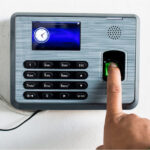
A modern door access control system replaces that chain of vulnerabilities with something centrally managed and digitally auditable. Depending on the deployment, employees and authorised visitors can enter through RFID smart cards, mobile credentials, PIN authentication, fingerprint readers, or facial recognition — each method generating a log that physical keys never could.
The difference in administrative control is significant. An HR manager can revoke an ex-employee’s access credentials in seconds from a dashboard, rather than waiting for facilities staff to change a lock.
Security Expectations Have Risen Alongside UAE’s Business Ambitions
The UAE has built its commercial reputation around sectors that carry inherent physical and data security obligations — finance, technology, logistics, healthcare, and increasingly, AI infrastructure. With that comes greater accountability for who can physically enter sensitive spaces.
Server rooms are the clearest example. Unauthorised physical access to network infrastructure creates cybersecurity exposure that firewalls alone cannot address. The same logic applies to finance departments handling confidential records, legal teams with client-privileged material, and executive floors where strategic conversations take place.
A properly scoped door access control system maps those risk areas to appropriate entry restrictions — without turning the office into a fortress that slows down everyday operations.
Compliance Is Driving Adoption, Not Just Security Concerns
Across regulated sectors in the UAE, access logs are no longer just an IT record — they’re becoming a compliance asset.
Time-stamped entry data showing who accessed which area, when, and for how long supports internal governance reviews, HR investigations, insurance claims, and external audits. In Dubai specifically, SIRA (Security Industry Regulatory Agency) frameworks continue to push commercial operators toward structured, verifiable security infrastructure.
For businesses in finance, healthcare, education, or telecom, having clean and retrievable access records has moved from optional to expected. The companies that invested early in proper access systems are finding those records genuinely useful — not as a formality, but as documented evidence of duty of care.
The Smart Building Connection
The UAE’s smart-city development agenda has had a tangible knock-on effect at the building level. Commercial towers completed in the last five years increasingly treat physical security as one layer within a broader building intelligence stack.
In these environments, a door access control system doesn’t operate in isolation. It connects to CCTV and surveillance infrastructure, visitor management platforms, fire and life safety systems, smart lighting, and HVAC controls. When an employee badges into a restricted zone, the system may simultaneously log occupancy, activate lighting, and adjust climate settings without any manual intervention.
This convergence is practical, not just technically impressive. Facilities managers get a single source of truth for building activity rather than piecing together data from five separate systems.
Hybrid Work Changed the Access Problem
Before 2020, most UAE office access needs were predictable. Staff worked fixed hours at assigned desks, visitor volumes were manageable, and building layouts were stable.
Hybrid working dismantled that predictability. Many businesses now operate staggered schedules, hot-desking arrangements, and shared zones that rotate between teams or organisations on different days. In co-working environments — which have grown substantially across Dubai and Abu Dhabi — the access challenge is even more complex.
Cloud-managed access control platforms have become the practical answer. Permissions can be updated remotely, temporary credentials issued for contractors or visitors without physical badge printing, and multi-branch access managed from a single dashboard. For a regional business operating across Dubai, Sharjah, and Abu Dhabi simultaneously, the difference between local and cloud-managed access is considerable in both time and administrative overhead.
The Move Toward Contactless Access
Contactless technology moved from preference to near-expectation across UAE workplaces following the pandemic period, and that shift has held. Many organisations that previously relied on proximity cards have since moved to mobile credential systems using Bluetooth or NFC — meaning employees enter through their smartphones rather than a separate access card.
Beyond convenience, the operational benefit is meaningful. Lost cards create security gaps that need immediate remediation. A mobile credential tied to a specific device is harder to share, duplicate, or lose without obvious consequences.
Facial recognition systems are becoming increasingly common in high-end commercial properties across the UAE, especially in environments that require stronger security without slowing down daily access, such as data centres, pharmaceutical facilities, and financial departments.
Biometrics in the Workplace: Where It Makes Sense
Biometric authentication isn’t being deployed uniformly across UAE offices — it’s being applied where the risk profile justifies it.
Server rooms and telecom infrastructure spaces benefit from fingerprint or facial recognition because these areas often contain assets where a single unauthorized entry could have consequences far beyond the immediate facility. Executive suites, financial departments, and data storage facilities present similar cases.
The accuracy of biometric hardware has improved substantially, and deployment costs have come down to the point where mid-market commercial tenants can justify the investment where the risk is real. Anti-tailgating capabilities — where the system can detect when more than one person enters on a single credential — are increasingly standard in higher-security deployments.
Operational Value Beyond the Security Case
One reason access control systems continue gaining traction in UAE organisations is that security is only part of the return on investment conversation.
Automated entry removes the dependency on reception staff for basic access management during off-peak hours. Occupancy data from access logs feeds directly into workplace planning decisions — understanding which floors or zones are consistently underused, for example, has real implications for real estate cost management. Emergency mustering becomes more reliable when the system can generate an accurate real-time count of who is in the building.
For larger organisations managing 300 or more staff across multiple floors, these operational benefits often justify the cost of the system independently of the security case.
Cloud Management: The Shift Away From On-Premise Systems
Older access control infrastructure required on-site servers, local IT management, and physical visits to update permissions or pull reports. Cloud-based platforms have largely replaced that model for new deployments.
Administrators can now revoke access, investigate incidents, monitor activity, and generate compliance reports without being on-site. Real-time alerts flag unusual access patterns — repeated failed attempts at a restricted door after hours, for instance — without requiring a security team member to be watching a monitor.
For UAE businesses managing multiple locations, this centralised visibility is particularly practical. A security manager in a Dubai head office can audit access activity across Abu Dhabi and Sharjah branches in the same interface.
Where This Is Heading
The direction of travel in UAE access control is toward greater integration rather than standalone systems. AI-assisted anomaly detection is beginning to appear in more sophisticated deployments, flagging access patterns that fall outside established norms without requiring manual review. Digital identity management — connecting physical access credentials to HR systems, IT permissions, and visitor platforms in a single profile — is becoming a realistic medium-term expectation for larger organisations.
For businesses investing in new commercial space or refreshing existing security infrastructure, access control is worth approaching as a workplace management platform rather than a lock replacement. The underlying technology has matured to the point where the conversation should centre on what operational and compliance benefits the system delivers — not simply whether it keeps unauthorized people out.
That shift in framing is perhaps the clearest sign that door access control has become a genuine business infrastructure decision in the UAE, rather than a facilities afterthought.
Final Thoughts
Security expectations inside UAE workplaces have shifted permanently. Businesses across Dubai, Abu Dhabi, and the wider Emirates are navigating regulatory pressure, hybrid workforce demands, and smarter building standards simultaneously — and legacy access methods were never built for that environment.
A door access control system, deployed with clear intent, addresses several of those challenges within a single infrastructure investment. The operational data it generates, the compliance records it maintains, and the administrative control it returns to management teams all carry value that extends well beyond keeping unauthorized people out.
The businesses seeing the strongest return from these systems share one thing in common — they treat access control as a workplace management tool, not a security afterthought. In the UAE’s current commercial landscape, that distinction matters more than most organisations realise until they’ve made the switch.