

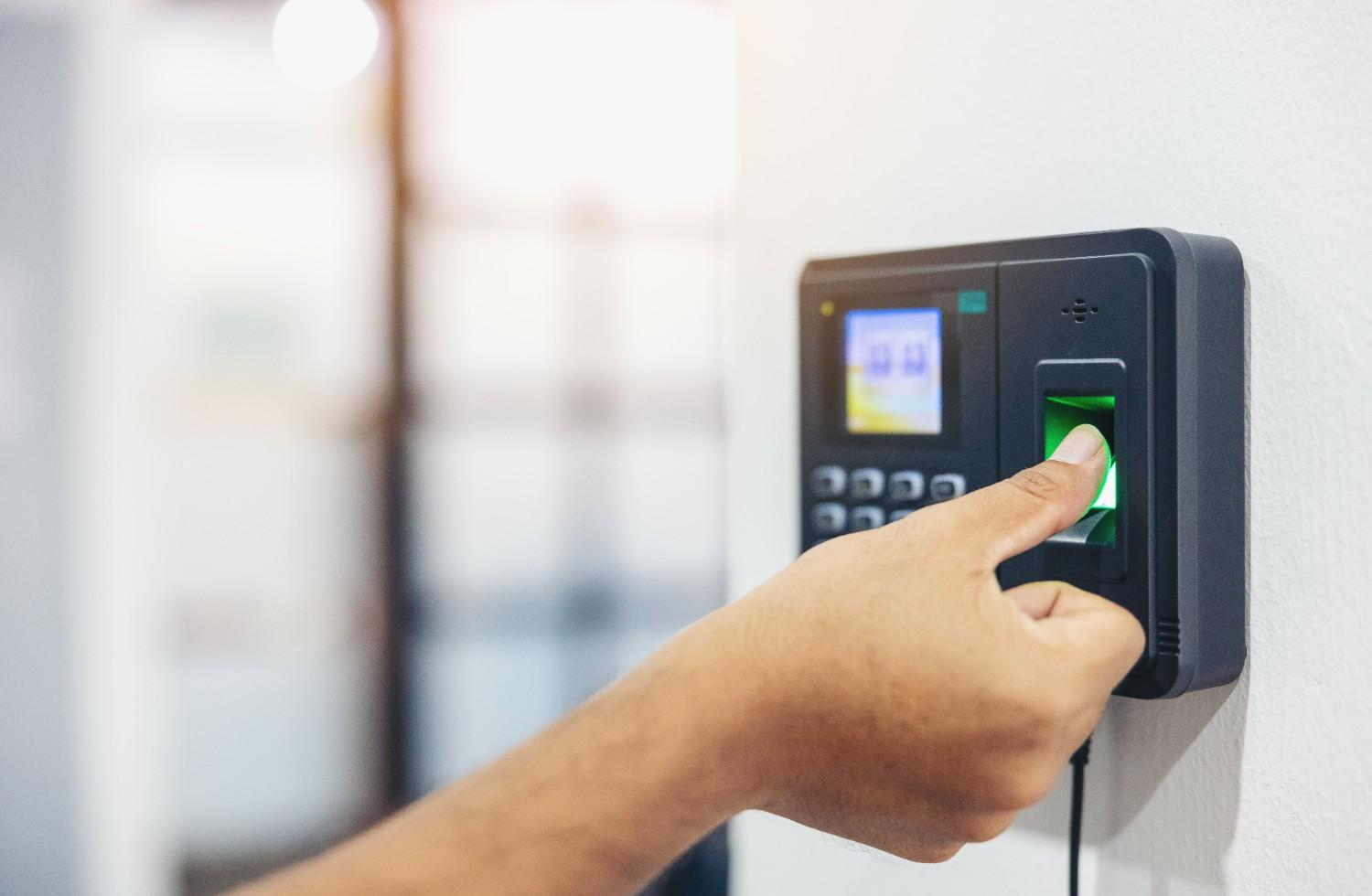
Managing employee attendance is no longer just an HR routine. In Dubai, it has become a business-critical function tied to legal compliance, payroll accuracy, workforce visibility, and operational efficiency. As businesses grow across multiple locations, shifts, and project sites, relying on manual registers or outdated punch systems creates unnecessary risk.
A modern Time Attendance system helps businesses track working hours accurately, reduce payroll errors, improve employee accountability, and maintain proper records for internal control and regulatory readiness. For companies in Dubai, this matters even more because workforce management must align with UAE labour rules on working hours, overtime, leave, and wage payments. The standard private-sector limit is 8 hours per day or 48 hours per week, and employees also have rights around breaks, overtime, and annual leave that businesses must manage correctly.
Whether a business operates an office, warehouse, retail outlet, construction site, school, clinic, or multi-branch operation, the right Time Attendance solution can improve both compliance and productivity. Here are 10 important facts every Dubai business should know.
1. Time Attendance systems are now part of compliance, not just convenience
A common mistake is treating attendance tracking as a simple admin tool. In reality, attendance data sits at the centre of payroll, overtime calculation, leave tracking, and workforce disputes. UAE labour law sets clear limits on normal working hours, and businesses need reliable records to show that employees’ time is being monitored correctly. Workers also cannot work for more than five consecutive hours without breaks totalling at least one hour in aggregate, except in cases defined by the law and regulations.
This means a proper Time Attendance system helps businesses do more than mark presence. It creates a structured record of start times, breaks, shift patterns, and overtime, which is essential when reviewing compliance or resolving payroll questions.
2. Ramadan scheduling makes automated attendance tracking especially valuable in Dubai
In the UAE private sector, normal working hours are reduced by two hours per day during Ramadan. This is an official requirement, not an optional adjustment. A business that uses spreadsheets or manual processes can easily make mistakes during this period, especially when different departments or branches run different shifts.
A smart Time Attendance setup can pre-configure Ramadan schedules, update shift rules, and calculate attendance against the reduced working hours automatically. This reduces payroll confusion and helps employers maintain consistency across the organisation. For businesses with seasonal staffing patterns or extended operating hours, this feature becomes particularly important.
3. Accurate attendance records support payroll discipline and wage protection
In the UAE, wages in the private sector are tied to the Wage Protection System, which requires employers to pay wages in the manner and timing agreed in the employment contract through approved channels. That makes accurate attendance data highly valuable, because salary calculations often depend on actual hours worked, overtime, absences, and approved leave.
A reliable Time Attendance system helps ensure payroll is based on verified records instead of assumptions or manual corrections. For employers, this reduces salary disputes. For employees, it creates more transparency. In a busy market like Dubai, where many companies manage shift workers, field staff, security personnel, or multiple branches, strong attendance-to-payroll alignment is one of the biggest advantages of digital time tracking.
4. Biometric attendance reduces fraud, but privacy compliance matters too
One of the biggest reasons businesses move to biometric Time Attendance systems is to stop “buddy punching,” where one employee checks in on behalf of another. Fingerprint, face recognition, and other identity-based methods improve accuracy and reduce attendance fraud.
But there is another side to this. Under the UAE Personal Data Protection Law, biometric data falls within sensitive personal data, and personal data generally cannot be processed without consent except in cases allowed by law. The law also requires consent to be clear, simple, unambiguous, and accessible where consent is the legal basis used.
For Dubai businesses, that means biometric Time Attendance should be implemented with proper policies, secure storage, restricted access, and a clear employee notice and consent process where applicable. The strongest systems today focus not only on accuracy, but also on secure handling of attendance data.
5. Contactless attendance is now a practical workplace preference
In many workplaces, especially high-traffic environments, contactless attendance has become more attractive than traditional touch-based devices. Face recognition and similar technologies help reduce physical contact while maintaining quick employee throughput at entrances and access points.
This is especially useful in offices, schools, clinics, retail spaces, and large buildings where many people check in within a short window. For employers, the benefit is not just hygiene. It also improves speed, reduces bottlenecks, and makes the daily check-in process more user-friendly. A well-chosen Time Attendance system should match the real environment of the workplace, not just the cheapest hardware option.
6. Field teams need location-aware attendance, not just office-based punching
Not every workforce reports to a reception desk. Construction teams, delivery staff, maintenance crews, technicians, and mobile supervisors often start the day directly at project locations. In these cases, a location-aware Time Attendance solution is far more useful than a fixed wall-mounted terminal.
GPS-based attendance, mobile app check-ins, geofencing, and site-based verification help employers confirm that staff are actually present at the assigned location. This is especially relevant in Dubai and across the UAE, where companies often operate across multiple sites and emirates.
It is also practical from a workforce safety perspective. For example, the UAE’s annual Midday Break policy prohibits outdoor work under direct sunlight and in open-air spaces between 12:30 pm and 3:00 pm from 15 June to 15 September. For businesses managing outdoor teams, attendance records can support better scheduling and stronger compliance documentation.
7. Overtime calculation is too important to leave to manual tracking
Overtime mistakes are one of the most common payroll problems in growing businesses. UAE guidance states that private-sector employees are generally entitled to overtime pay of at least 25% above normal hourly wage, and this can rise to 50% for overtime worked between 10 pm and 4 am, subject to the applicable rules and exceptions.
A modern Time Attendance system can calculate overtime automatically based on shift timings, approved extra hours, late arrivals, grace periods, and off-day rules. This makes payroll more accurate and protects employers from inconsistent manual calculations. It also helps employees trust the fairness of the process, which improves workplace confidence.
8. Employee self-service reduces HR workload significantly
Good attendance software does not only help management. It also helps employees access their own records. This can include attendance logs, late marks, leave applications, leave balances, and schedule visibility through a web portal or mobile app.
This matters because annual leave entitlements in the UAE are clearly structured, including 30 days of fully paid annual leave after one year of service for eligible employees. When staff can view their own attendance and leave information, HR teams spend less time answering routine questions and more time handling higher-value work.
For businesses scaling in Dubai, this becomes a real efficiency gain. The right Time Attendance platform can reduce admin pressure while also improving transparency across departments.
9. Cloud-based systems are better suited to multi-location businesses
A business with more than one branch needs more than a standalone attendance machine. It needs visibility. Cloud-based Time Attendance systems allow authorized managers and HR teams to monitor attendance across sites in real time, generate reports quickly, and standardise policies across locations.
This is especially useful in Dubai-based businesses that also operate in Abu Dhabi, Sharjah, or other emirates. Instead of collecting data from separate devices and compiling reports manually, cloud platforms centralise information and make it easier to review trends such as absenteeism, overtime, delayed arrivals, and staffing pressure points.
This also supports business continuity. If one office relocates, expands, or changes shift models, the system can usually scale much more easily than older on-premise setups.
10. A Time Attendance system should be chosen as a long-term workforce tool, not just a device
Many companies make the mistake of buying a machine instead of investing in a solution. A wall-mounted reader alone does not solve workforce management problems. The real value comes from how the system connects attendance tracking with payroll, leave, reporting, compliance, and operational decisions.
A future-ready Time Attendance solution should be easy to scale, secure enough to protect employee data, flexible enough to support different shifts and job sites, and clear enough to produce accurate reports whenever needed. It should also fit the business model. A retail store, warehouse, corporate office, school, and construction company will not all need the same setup.
In Dubai’s business environment, attendance tracking is becoming more strategic. It supports legal discipline, payroll accuracy, operational planning, and better workforce visibility. Businesses that choose the right system now are in a stronger position to grow without losing control over their daily operations.
Final Thoughts
For Dubai businesses, Time Attendance is no longer a back-office process that can be handled casually. It affects labour law compliance, salary accuracy, employee trust, operational control, and long-term scalability. From Ramadan hour adjustments and overtime calculations to biometric privacy and field workforce monitoring, the demands on employers are much higher than before.
A reliable attendance system helps businesses move from reactive administration to structured workforce management. It reduces errors, strengthens accountability, and gives decision-makers better visibility into how the workforce actually operates.
For companies in Dubai looking to build a more secure and efficient workplace, investing in the right Time Attendance system is not just a technology upgrade. It is a smarter way to manage people, performance, and compliance.